What does a fire and security installer actually do?
By Tom, Fortis Fire & Security · 4 min read · 11 Nov 2026 · Updated 19 Nov 2026
"Fire and security" covers a lot of kit: fire alarms, burglar alarms, cameras, door entry, gates, even the Wi-Fi that keeps it all connected. A fire and security installer is the firm that puts the right mix of it into a building and keeps it working afterwards.
FortiDraw is a joint venture between Alpaca Mango and Fortis Fire & Security, an installer based in Ascot that has worked across the South East for over 20 years. So here is what that work actually looks like, using Fortis as the example.
Three kinds of customer
Fortis splits its work into homes, businesses and schools. The systems overlap, but each kind of building asks for something different.
Homes
For households, the aim is to protect people, the property and what is in it, ideally stopping an incident before it happens. Typical work includes:
- Fire alarms tailored to the home, which can combine smoke, heat and carbon monoxide detection, either standalone or linked to smart devices so you're alerted when the house is empty.
- Intruder alarms, from a basic system with a loud siren to monitored systems that alert keyholders or the emergency services, and extending to sheds and garages.
- CCTV inside and outside, viewable live on a phone, with motion detection, night vision and smart alerts.
- Access control such as keyless entry, video intercoms and smart locks, with a log of who came and went.
- Gate automation for drives: swing gates, sliding gates and barriers, opened remotely or on a schedule.
Businesses
Commercial premises face theft, vandalism and fire, and a system needs to fit the size and needs of the business. Fortis's commercial work covers:
- Fire alarms installed to comply with UK regulations, standalone or integrated with other systems, with routine checks and maintenance.
- Intruder alarms from basic protection to monitored systems that alert police and keyholders.
- CCTV providing high-definition footage that can serve as evidence, viewable remotely.
- Access control from keypads to biometric readers, so a business can see who is on site and restrict sensitive areas.
- Automated gates for vehicle access, linked with CCTV and access control.
- Wi-Fi, because remote CCTV viewing and alarm monitoring depend on a reliable connection.
Schools
Schools combine large buildings, open grounds and many entrances, with a lot of people on site every day and routines that shouldn't be disrupted. On top of fire alarms, intruder alarms and CCTV at entrances, corridors, playgrounds and car parks, school work includes:
- Access control: keypad entry for staff, cards or fobs for staff and pupils, video intercoms for visitors, and automated vehicle gates, which can be scheduled around drop-off and pick-up.
- Lockdown systems for an intruder incident: doors that lock at the push of a button, panic buttons for staff, intercoms to relay instructions, silent alerts to staff devices that don't alarm pupils, and integration with CCTV and access control.
How a job runs
Whatever the building, the work follows the same four steps at Fortis.
- Site survey. The team visits, looks at the building, answers questions and works out what it needs. Fortis offers this free.
- Recommendations in plain language. What is needed and why, without extras the customer doesn't need.
- Installation and testing. The system goes in and is tested thoroughly before handover.
- Ongoing support and maintenance. Regular checks keep the system working when it's needed, and a fire alarm or monitored intruder alarm needs looking after for its whole life.
The survey is where most of the value is decided. We cover it in more depth in why the site survey and good drawings matter.
Training and standards
Fire and security work is governed by standards, and keeping up with them is part of the job. Fortis's recent steps include:
- BS 5839-1 Fundamentals, the standard for fire detection and alarm systems in non-domestic buildings, covering design, installation, commissioning and maintenance (completed late 2025).
- The Fire Industry Association's BS 5839-6 Fundamentals course, the equivalent standard for homes, including houses, flats and HMOs.
- Gate Safe registration, the scheme that promotes safety in automated gates and barriers.
If you are choosing an installer, it is reasonable to ask what training and registrations they hold for the work you need. For intruder alarms with police response, ask about NSI or SSAIB approval; our guide to choosing a burglar alarm explains why.
Where FortiDraw comes in
Every one of those jobs involves a plan: where the detectors and call points go, which doors get readers, where the cameras point, how the cables run. FortiDraw is built for that part of the job. You upload the building's PDF floor plan, place device symbols for detectors, call points, cameras, readers and network points, draw zones and walls, link devices with cable rails, see each camera's coverage cone, add a title block, and export the marked-up PDF for the customer or the team.
It works on a desktop in the office and on a phone on site, where you can add notes, photos and voice memos as you survey.
Try FortiDraw free on your next survey. If you're a homeowner or business in the South East looking for an installer, you can contact Fortis Fire & Security for a free site survey.
More on Installers
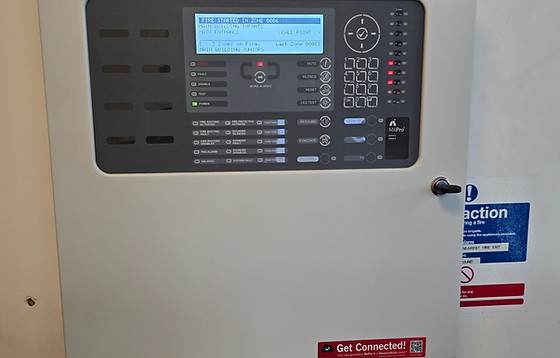 Fire alarm grades explained: A, C, D1, D2, F1 and F2Fire alarm grades describe the kind of system in a home. The six grades in BS 5839-6:2019+A1:2020, how a grade differs from a category such as LD2, and which grade is recommended where.Fire safety · 5 min · 19 Nov 2026
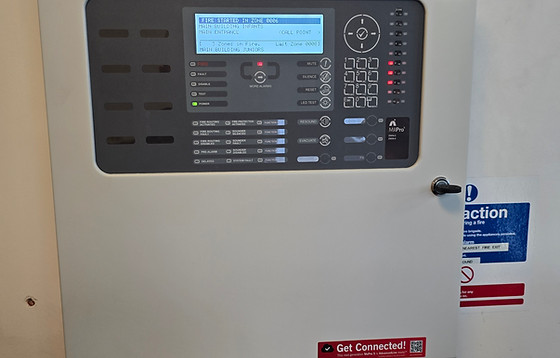 Fire alarm system categories explained: M, L1–L5, P1, P2 and LD1–LD3Every UK fire alarm system category on one page: M, L1 to L5, P1 and P2 from BS 5839-1, and LD1 to LD3 from BS 5839-6 for homes, each in a sentence or two, with a diagram and links to the detailed guides.Fire safety · 4 min · 19 Nov 2026
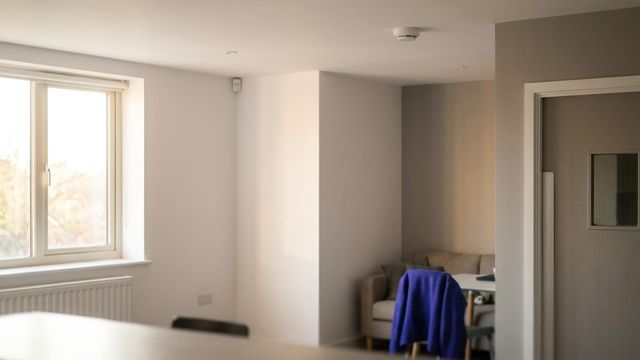 L1 fire alarm system requirements: what whole-building cover meansAn L1 fire alarm system has automatic detection throughout the building. The L1 definition, the low-risk areas BS 5839-1 lets you leave out, what changed in 2025, and when L1 is specified.Fire safety · 3 min · 19 Nov 2026