Fire alarm grades explained: A, C, D1, D2, F1 and F2
By FortiDraw · 5 min read · 19 Nov 2026
Fire alarm grades describe what kind of fire alarm system a home has, mainly how it is powered and controlled. They come from BS 5839-6, the British Standard for fire detection and alarm systems in domestic premises, and the current edition (BS 5839-6:2019+A1:2020) has six: Grade A, C, D1, D2, F1 and F2.
A grade is always paired with a category, which says where the alarms go. This page is a quick guide to the six grades and how they differ from categories; for the detail on D1, D2, F1 and F2, the 2019 changes and the common combinations, see our Grade D1 smoke alarm guide.
The six fire alarm grades in BS 5839-6
BSI's listing shows BS 5839-6:2019+A1:2020 as the current edition, published in October 2020 and replacing the 2019 original. Summarised from the guides by alarm makers Aico and Apollo and the retailer Safelincs, the grades run from the most complex system to the simplest:
- Grade A: a full fire detection and alarm system with separate detectors and sounders, control and indicating equipment, and a backup power supply. Apollo and Safelincs describe the equipment as BS EN 54-2 control equipment and a BS EN 54-4 power supply, designed and installed to BS 5839-1, the commercial standard.
- Grade C: detectors and sounders, which may be combined smoke alarms, on a common power supply with mains and standby, plus central control equipment.
- Grade D1: one or more mains-powered alarms, each with a tamper-proof standby supply that lasts the life of the alarm.
- Grade D2: one or more mains-powered alarms, each with a standby battery the user can replace.
- Grade F1: battery-only alarms with a tamper-proof primary battery that lasts the life of the alarm.
- Grade F2: battery-only alarms with a primary battery the user replaces.
Grades B and E no longer exist: Safelincs notes both were removed in the 2019 revision and are not recommended for new or replaced systems. The old Grade D and Grade F were each split in two. If a specification or an old certificate says plain "Grade D", it predates 2019.
Grade vs category: what's the difference?
The two answer different questions:
- The grade is the type of system: what the equipment is and how it is powered. Apollo describes grades as the minimum quality or functionality of the equipment.
- The category is the coverage: which rooms get detection. In homes the categories are LD1 (all areas where a fire could start), LD2 (escape routes plus higher-risk rooms such as the kitchen and living room) and LD3 (escape routes only), with PD1 and PD2 for property protection.
A full specification names both, for example "Grade D1 Category LD2": mains alarms with sealed backup batteries, in the hallway, landing and the higher-risk rooms. Changing the grade changes the kit; changing the category changes the rooms. The categories are explained room by room in LD1, LD2 and LD3 fire alarm systems in homes.
Grade D1 Category LD2: mains alarms with sealed backup batteries (the grade) in the escape route, living room and kitchen (the category). Drawn in FortiDraw.
Which grade is recommended where
Table 1 of BS 5839-6, as summarised by Aico, recommends:
- Rented homes (new or existing): Grade D1.
- Existing HMOs of one or two storeys: Grade D1.
- New owner-occupied homes of two or three storeys: Grade D2.
- Self-catering and short-term lets to paying guests: Grade D1.
- Sheltered housing: Grade D2 in the flats, Grade A in the communal areas.
Safelincs adds that F2 is only recommended for existing owner-occupied homes where the battery is likely to be replaced within five days of the low-battery warning. Building regulations, landlord rules and council HMO standards can set their own minimums, which the D1 and D2 guide covers.
Grades are for homes; commercial systems use categories
BS 5839-1, the standard for non-domestic buildings, has no grades. Its systems are described by category alone: M (manual), L1 to L5 (life protection) and P1 and P2 (property protection). See fire alarm system categories explained for all of them on one page.
Who chooses the grade
The grade and category for a home come from the regulations that apply to it, the landlord's or council's requirements and, for HMOs and other shared or rented housing, the fire risk assessment. A competent installer then designs and fits to that. The installer can advise, but the decision belongs to whoever is responsible for the property.
Questions people ask about fire alarm grades
What are the fire alarm grades?
BS 5839-6 sets six fire alarm grades for homes: Grade A, Grade C, Grade D1, Grade D2, Grade F1 and Grade F2. The grade says what the system is and how it is powered; the category (LD1, LD2 or LD3) says which rooms have alarms.
Which fire alarm grade is the highest?
Grade A: a full fire detection and alarm system with control and indicating equipment, separate detectors and sounders and a backup power supply, designed and installed to BS 5839-1. Grade F2, battery alarms with batteries the user replaces, is the simplest.
What is the difference between Grade D1 and Grade D2?
Both are mains-powered alarms with a standby supply. In Grade D1 the standby is tamper-proof and lasts the life of the alarm; in Grade D2 it is a battery the user can replace.
What fire alarm grade does a rented home need?
Table 1 of BS 5839-6, as summarised by Aico, recommends Grade D1 for rented homes, new or existing, and for existing HMOs of one or two storeys. Regulations, the landlord's or council's rules and the fire risk assessment can set their own minimum.
Is a fire alarm grade the same as a category?
No. The grade is the type of equipment and its power; the category is the coverage. A full specification names both, for example Grade D1 Category LD2. Commercial buildings under BS 5839-1 have categories (M, L1 to L5, P1 and P2) but no grades.
Do Grade B and Grade E still exist?
No. Both were removed in the 2019 revision of BS 5839-6, and the old Grade D and Grade F were each split in two (D1 and D2, F1 and F2). A certificate that says plain Grade D predates 2019.
Showing it on a plan
"Grade D1 LD2" says what to buy, not where each alarm goes. In FortiDraw you place smoke and heat alarm symbols on each floor's plan, note the grade and category on the sheet and, on a paid plan, export the PDF; see fire alarm layout drawings.
General information, checked in November 2026, not advice for your property. Grade definitions are summarised from manufacturers' guides to BS 5839-6:2019+A1:2020; check the current standard, building regulations and your council's guidance. See GOV.UK: Approved Document B.
More on Fire safety
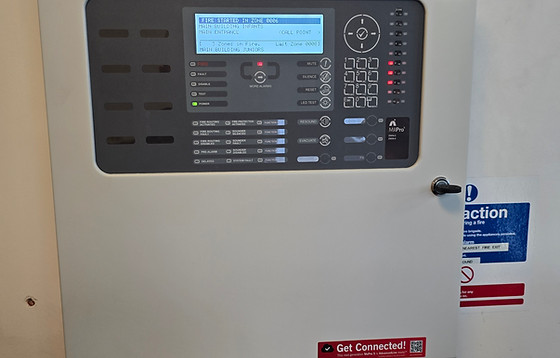 Fire alarm system categories explained: M, L1–L5, P1, P2 and LD1–LD3Every UK fire alarm system category on one page: M, L1 to L5, P1 and P2 from BS 5839-1, and LD1 to LD3 from BS 5839-6 for homes, each in a sentence or two, with a diagram and links to the detailed guides.Fire safety · 4 min · 19 Nov 2026
 L1 fire alarm system requirements: what whole-building cover meansAn L1 fire alarm system has automatic detection throughout the building. The L1 definition, the low-risk areas BS 5839-1 lets you leave out, what changed in 2025, and when L1 is specified.Fire safety · 3 min · 19 Nov 2026
 L4 fire alarm system: detection in the escape routes onlyAn L4 fire alarm system puts automatic detection only in escape routes such as corridors and stairways. Where it is used, what it leaves out, the 2025 change, and how it compares with L3 and L5.Fire safety · 4 min · 19 Nov 2026