Grade D1 smoke alarms: what D1, D2, F1 and F2 mean, and how they pair with LD1 and LD2
By FortiDraw · 5 min read · 18 Nov 2026
A Grade D1 smoke alarm system is one where every alarm runs on the mains and has its own built-in standby battery that can't be removed or tampered with, made to last the life of the alarm. If the power goes off, the alarms keep working, and nobody can take the battery out to stop a nuisance alarm.
The grades come from BS 5839-6, the British Standard for fire alarms in homes. The grade says what kind of system you have, mostly how it is powered. It sits alongside the category (LD1, LD2, LD3), which says which rooms get alarms. This guide explains each grade, what changed in the 2019 edition, and how a grade and a category combine into something like "Grade D1 Category LD2".
Where D1 sits among the six grades
BS 5839-6:2019+A1:2020 has six grades, from Grade A (a full system with a control panel, built to the commercial standard) and Grade C (detectors and sounders on a common supply with central control) down to the alarms most homes have. All six are compared on one page in fire alarm grades explained. The four that matter for most homes, summarised from the guides published by alarm makers Aico and Apollo:
Grade D1
One or more mains-powered alarms, each with a tamper-proof standby supply. Safelincs' summary adds that the standby supply must last the full life of the alarm. Apollo notes that D1 alarms use non-replaceable cells, typically rechargeable.
Grade D2
One or more mains-powered alarms, each with a standby battery the user can replace, which won't last the alarm's whole life.
Grade F1 and Grade F2
Battery-only alarms: F1 with a tamper-proof battery that lasts the life of the alarm (the sealed long-life type), F2 with a battery the user replaces. Safelincs says F2 is only recommended for existing owner-occupied homes, and only where the battery is likely to be changed within five days of the low-battery warning.
What changed in the 2019 edition
If you learned the grades before 2019, these are the differences that matter:
- Grades B and E were removed. E was mains alarms with no standby supply at all.
- Grade D was split into D1 and D2, and Grade F into F1 and F2, depending on whether the battery is tamper-proof and lasts the life of the alarm.
- Grade C was redefined.
- Carbon monoxide alarms can join the interlink. Aico says mains-powered CO alarms to BS EN 50291, installed to BS EN 50292, can be linked to the fire alarms if every component's maker recommends it.
- More weight on testing. A new table sets out testing and servicing by grade, and Aico's summary says every system other than Grade A should be tested at least monthly, for example with the alarms' test buttons, checking that one alarm sets off all the others.
- Higher recommendations for rented homes, according to Safelincs.
So a specification that still says plain "Grade D" predates the 2019 edition; ask whether D1 or D2 is meant.
How grade and category combine
A full specification names both: the grade for the kind of system, the category for the coverage. "Grade D1 Category LD1" means mains alarms with sealed backup batteries in every room where a fire could start, plus the hallways and landings. "Grade D1 Category LD2" means the same kind of alarm in the escape route and the higher-risk rooms, usually the kitchen (with a heat alarm) and the main living room. The categories are explained room by room in LD1, LD2 and LD3 fire alarm systems in homes.
These combinations come up most often:
- Grade D2 Category LD3: the minimum Approved Document B sets for every new dwelling in England. The government's Approved Document B FAQ confirms D2 LD3 is considered adequate for building regulations.
- Grade D2 Category LD2: the standard's recommendation for new owner-occupied homes of two or three storeys, as summarised by Aico.
- Grade D1 Category LD2: the standard's recommendation for rented homes and for existing HMOs of one or two storeys, and the level Newham Council's examples give for a shared house HMO.
- Grade D1 Category LD1: the standard's recommendation for self-catering and short-term lets to paying guests, and Newham's example for a bedsit HMO of up to two storeys.
- Grade A Category LD2 or LD3: what Approved Document B asks for in a large house (more than one storey, at least one over 200m²): LD3 for two storeys, LD2 for three or more.
- Grade A Category LD1: Newham's example for a bedsit HMO of three or four storeys.
Councils set their own HMO standards and they vary, so check your local authority's guidance rather than relying on one council's examples.
What the rules ask for, by home
New homes in England
Approved Document B says smoke and heat alarms should be mains operated, to BS EN 14604 and BS 5446-2 respectively, with a standby supply such as a battery or capacitor. Battery-only alarms (the F grades) don't fit that guidance.
Rented homes in England
The landlord regulations require a smoke alarm on every storey with living accommodation but do not say whether it must be mains or battery. The government's guidance recommends BS 5839-6 compliant alarms and, if battery alarms are used, sealed-for-life ones. The standard itself recommends Grade D1 for rented homes. Our guide to smoke and heat alarms at home covers the landlord rules in full.
Homes in Scotland
The Scottish Government allows either mains-wired alarms fitted by a qualified electrician or sealed tamper-proof alarms with long-life lithium batteries. Alarms with replaceable batteries are not allowed.
Businesses and other buildings
Grades are a BS 5839-6 idea for homes. Non-domestic buildings follow BS 5839-1, with categories M, L1 to L5 and P1, P2: see L1 to L5 fire alarm systems and commercial fire alarm categories under BS 5839-1.
Put the grade and category on the drawing
"Grade D1 LD2" tells an electrician what to buy, but not where each alarm goes in this particular house. A marked-up floor plan does: every smoke and heat alarm placed in its room, a note of the grade and category on the sheet, and the kitchen heat alarm easy to spot.
In FortiDraw you upload the plan as a PDF, place smoke and heat alarm symbols on each storey, label them, add the grade and category in a note or title block, and save the project. On a paid plan you can export the marked-up PDF for the landlord, the customer or the building control file. FortiDraw does not choose a grade or category, check compliance or certify an installation; that stays with the regulations, the council or the fire risk assessment, and a competent installer.
Start marking up a Grade D1 alarm layout free at FortiDraw.
General information, checked in November 2026, not advice for your property. Grade definitions are summarised from manufacturers' guides to BS 5839-6:2019+A1:2020; check the current standard, Approved Document B and your local council's guidance.
More on Fire safety
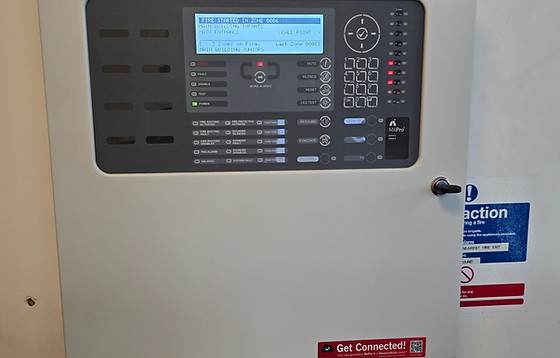 Fire alarm grades explained: A, C, D1, D2, F1 and F2Fire alarm grades describe the kind of system in a home. The six grades in BS 5839-6:2019+A1:2020, how a grade differs from a category such as LD2, and which grade is recommended where.Fire safety · 5 min · 19 Nov 2026
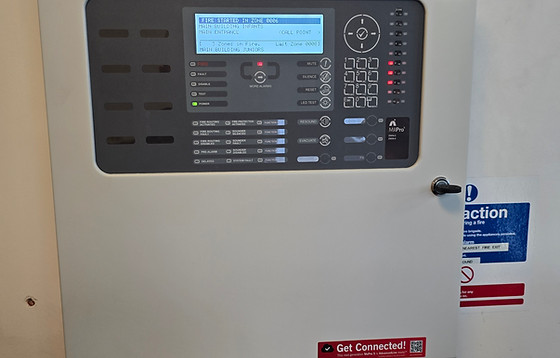 Fire alarm system categories explained: M, L1–L5, P1, P2 and LD1–LD3Every UK fire alarm system category on one page: M, L1 to L5, P1 and P2 from BS 5839-1, and LD1 to LD3 from BS 5839-6 for homes, each in a sentence or two, with a diagram and links to the detailed guides.Fire safety · 4 min · 19 Nov 2026
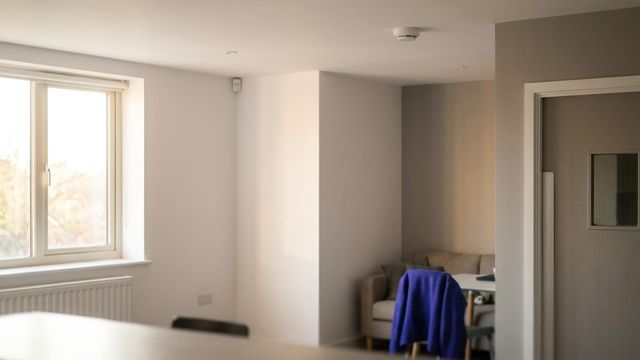 L1 fire alarm system requirements: what whole-building cover meansAn L1 fire alarm system has automatic detection throughout the building. The L1 definition, the low-risk areas BS 5839-1 lets you leave out, what changed in 2025, and when L1 is specified.Fire safety · 3 min · 19 Nov 2026