Smoke and heat alarms at home: where to fit them and how to test them
By FortiDraw · 6 min read · 5 Nov 2026 · Updated 19 Nov 2026
A smoke alarm is cheap, quick to fit and easy to forget. Fire services across the UK keep saying the same three things about them: have enough of them, put them in the right places, and test them. This guide gathers that advice in one place, along with the rules that apply in Scotland and to landlords in England.
Why it matters
When the Home Office launched a Fire Kills campaign in January 2016, the fire minister cited research that you are four times more likely to die in a fire if you live in a home without working smoke alarms. The same release noted that only around half of householders who own smoke alarms say they test them regularly. A smoke alarm with a flat battery or a dusty sensor gives you nothing.
Smoke alarm or heat alarm?
- Smoke alarms react to smoke, and are the right choice for living rooms, hallways and landings.
- Heat alarms react to a rise in temperature. The Scottish Fire and Rescue Service recommends one in the kitchen because heat alarms are designed not to be set off by steam or other fumes, which can set smoke alarms off.
- Carbon monoxide alarms are a different thing: they warn of carbon monoxide from fuel-burning appliances such as boilers and wood burners, not of fire.
Note that the government's guidance for landlords is clear that heat detectors are not a substitute for smoke alarms. Use heat alarms where smoke alarms would false-alarm, not instead of them.
Where to fit them
Advice from UK fire and rescue services lines up closely:
- At least one on every floor, ideally in the hallway or on the landing. The Royal Berkshire Fire and Rescue Service says at least one on every level, preferably on the ceiling in a hallway or landing; the government's campaign advice also says every level of the home.
- In the room you use most, such as the living room. This is part of the legal standard in Scotland (see below).
- On the ceiling, near the centre of the room or hallway. Cornwall Fire and Rescue Service explains why: smoke rises, so a ceiling alarm goes off sooner and gives you more time to get out. It suggests keeping alarms at least 30cm from any wall or light.
- Away from doors and heating or air-conditioning vents. The Scottish Fire and Rescue Service suggests about 30cm clear of walls, lights, doors and vents.
- Not in kitchens or bathrooms, where cooking and steam cause false alarms, and not in the garage, where exhaust fumes can.
- Where you'll hear it asleep. Check you can hear each alarm from every bedroom with the doors shut. If you can't, move it or add one. The Scottish Fire and Rescue Service says alarms in bedrooms aren't required but add protection while you sleep.
On a single-storey home, the hallway between the living and sleeping areas is the key spot. On a home with stairs, fit one at the bottom of the stairs and on each landing.
Testing and looking after them
Fire services differ slightly on how often to test. The Scottish and Cornwall services say every week and the Royal Berkshire service says ideally once a week; the government's 2016 campaign advice said monthly. Weekly is the safer habit, and it takes seconds.
- Press the test button until the alarm sounds.
- If it doesn't sound, change the battery. If it still doesn't sound, replace the alarm.
- Change the battery once a year, unless it is a sealed long-life (ten-year) alarm.
- Never take the battery out to stop a nuisance alarm, even for a moment.
- Vacuum the casing gently to keep dust out of the sensor: Cornwall and Royal Berkshire say twice a year, the Scottish service once a year. Don't paint over an alarm or stick anything on it.
- Replace every alarm after ten years, even if it still seems to work, because the parts that make them work wear out with age.
Interlinked alarms, and the law in Scotland
Interlinked alarms talk to each other: when one sounds, they all sound. That means a fire in the kitchen wakes someone asleep upstairs.
In Scotland, the Scottish Government says every home must have interlinked fire alarms. Meeting the standard is the owner's responsibility, or the landlord's if you rent. Each home needs:
- a smoke alarm in the living room or the room used most;
- a smoke alarm in every hallway and landing;
- a heat alarm in the kitchen;
- all of them ceiling-mounted and interlinked;
- a carbon monoxide alarm in any room with a carbon-fuelled appliance such as a boiler, open fire or wood burner (gas cookers and hobs don't need one). It doesn't need to be linked to the fire alarms.
Alarms can be mains-wired, fitted by a qualified electrician, or sealed tamper-proof units with long-life lithium batteries that you can fit yourself. The Scottish Government's where and what to buy page covers the types and standards, and who is responsible covers owners, landlords and shared owners.
If you rent in England
Since 1 October 2022, private landlords and social housing providers in England must, under the Smoke and Carbon Monoxide Alarm (Amendment) Regulations 2022:
- put at least one smoke alarm on every storey with a room used as living accommodation (a hall or landing counts);
- put a carbon monoxide alarm in every such room with a fixed combustion appliance, except gas cookers;
- check the alarms work on the day a new tenancy starts;
- repair or replace a faulty alarm once told about it.
Local councils enforce the rules, and a landlord who fails to comply with a remedial notice can be fined up to £5,000. Owner-occupiers aren't covered by these regulations, but the advice above applies to every home. Read the GOV.UK guidance for exclusions and detail.
Help from your fire service
Many fire and rescue services offer free home visits to the people most at risk. The Royal Berkshire service, for example, offers Safe and Well visits to eligible residents. In Scotland you can ask for a free home fire safety visit online or on 0800 0731 999; people at the highest risk are offered a visit and others get a fire safety plan. Fire services also ask people to help elderly or vulnerable relatives and neighbours fit and test their alarms.
Map your alarms on a plan
The easiest way to see whether you have enough alarms is to draw them. Take a floor plan of each storey and mark every smoke, heat and carbon monoxide alarm, the kitchen, the bedrooms and the boiler. Gaps jump out: a landing with nothing on it, a loft room out of earshot.
With FortiDraw you can upload a PDF plan, place detector symbols on each floor, add a note with the date each alarm was fitted, and export the marked-up PDF to keep with your home paperwork or hand to an electrician. It's free to start and works on a phone while you walk round.
Mark up your plan free at FortiDraw, then press every test button while you're there.
General fire safety information from UK fire and rescue services and government guidance, checked in November 2026, not advice for your property. Follow the alarm maker's instructions and your local fire and rescue service's advice.
More on Fire safety
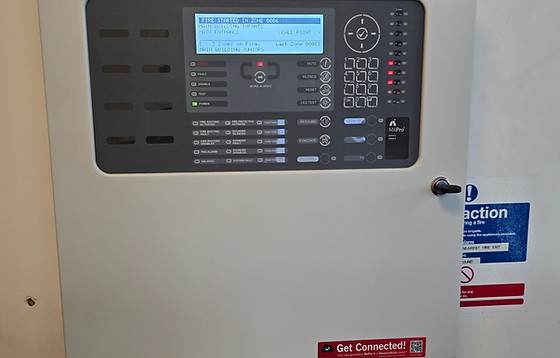 Fire alarm grades explained: A, C, D1, D2, F1 and F2Fire alarm grades describe the kind of system in a home. The six grades in BS 5839-6:2019+A1:2020, how a grade differs from a category such as LD2, and which grade is recommended where.Fire safety · 5 min · 19 Nov 2026
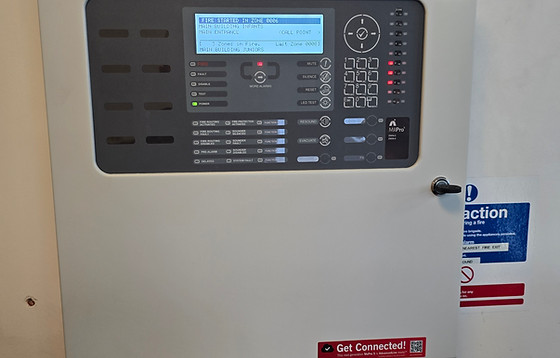 Fire alarm system categories explained: M, L1–L5, P1, P2 and LD1–LD3Every UK fire alarm system category on one page: M, L1 to L5, P1 and P2 from BS 5839-1, and LD1 to LD3 from BS 5839-6 for homes, each in a sentence or two, with a diagram and links to the detailed guides.Fire safety · 4 min · 19 Nov 2026
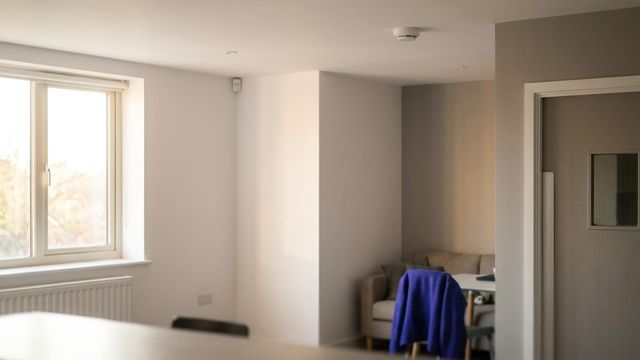 L1 fire alarm system requirements: what whole-building cover meansAn L1 fire alarm system has automatic detection throughout the building. The L1 definition, the low-risk areas BS 5839-1 lets you leave out, what changed in 2025, and when L1 is specified.Fire safety · 3 min · 19 Nov 2026